By MediTic IPS on
How to prepare for a telehealth visit
A well-prepared telehealth visit gets more done. Here's what you need, how to protect your privacy, what to have on hand, and when to go in person or call 123.


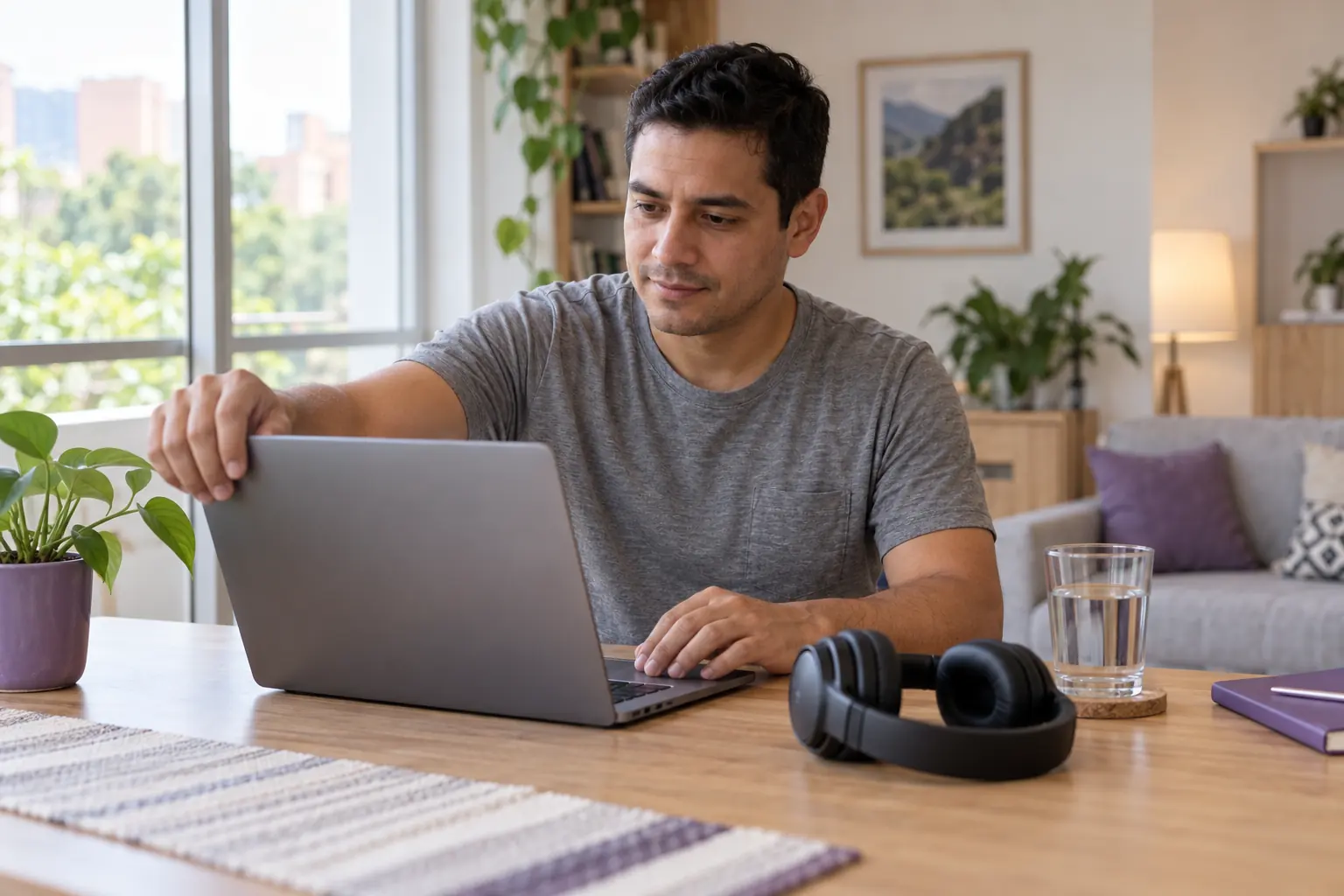
A telehealth visit lets you talk with a health care provider without leaving home, through a video call or another remote communication technology. With a little preparation, it can be a convenient way to get your questions answered or follow up on your health. This guide covers what you need, how to protect your privacy, what to have on hand, and when an in-person visit or emergency care is the better choice.
What a telehealth visit is
In Colombia, teleconsultation is one of the four categories of telemedicine, along with tele-expertise (telexperticia), teleconcepto and remote monitoring (telemonitoreo). That is how it is defined in Resolution 1644 of 2026 from the Ministry of Health and Social Protection, issued on July 31, 2026, which updated the rules for telehealth and telemedicine and repealed Resolution 2654 of 2019.
“Telehealth and telemedicine do not replace in-person care: they complement it and bring health care closer to those who have historically been farthest from it.” — Colombian Ministry of Health and Social Protection (translated from Spanish)
The World Health Organization (WHO) agrees: it describes telemedicine as a valuable complement to face-to-face interactions that cannot replace them entirely.
What you need before you start
- A phone, tablet or computer with a camera, microphone and sound, either charged or plugged in.
- A stable internet connection. MedlinePlus, the health information service of the U.S. National Library of Medicine, notes that there may be problems with the technology, such as losing the connection or a software issue, so it helps to test the link and the app a few minutes ahead of time.
- The access instructions you received when you booked your appointment.
- Your phone nearby in case the connection drops and the provider needs to reach you again.
Protect your privacy
WHO points out that telemedicine consultations should be carried out by qualified health workers and that the privacy of people's health information must be maintained. According to Colombia's Ministry of Health, the new regulation gives you more clarity about your rights in remote care: informed consent, protection of your personal data and the option to request a copy of the care you received.
On your end, a few simple steps help:
- Find a quiet, well-lit spot where other people can't overhear the conversation.
- If you're in a shared space, wear headphones.
- If you'd like a family member or someone you trust to join you, let the provider know at the start.
- Read the informed consent before you accept it, and ask about anything that isn't clear.
What to have on hand
MedlinePlus also recommends preparing so you can make the most of your visit, whether it is in person or through telehealth. Before you log on, gather:
- A list of all the medicines, herbs, vitamins and supplements you take, plus any allergies.
- A description of your symptoms: when they started, what makes them better and what makes them worse.
- The questions and concerns you want to discuss.
- Recent test results, prescriptions or visit summaries, if you have them.
- Pen and paper to take notes, or someone you trust to take them for you.
Before the visit ends, make sure you understand the instructions. If something isn't clear, keep asking until it is, and ask for written instructions if you need them.
When an in-person visit is the better choice
Telehealth isn't right for every situation. MedlinePlus explains that in some cases the provider may not be able to make the right diagnosis without examining you in person, or may need you to come in for a lab test.
That's why, during or after a telehealth visit, your provider may recommend continuing your care in person. If you're not sure which type of visit fits your reason for seeking care, ask when you book your appointment.
What to do in an emergency
A scheduled telehealth visit is not the place to handle an emergency. If you or someone with you is in a situation that could be life-threatening, call Colombia's emergency line, 123, or go to the nearest emergency room.
MedlinePlus lists these among the warning signs of an emergency:
- Severe chest pain or pressure.
- Trouble breathing.
- Fainting or passing out.
- Suddenly not being able to speak, see, walk or move, or sudden weakness on one side of the body.
- Sudden confusion.
- Heavy bleeding.
- Seizures.
- Thoughts of hurting yourself or others.
If any of these symptoms come up during a telehealth visit, tell the provider right away and seek emergency care.
Ready to book a telehealth visit?
At MediTic IPS, you can request a telehealth appointment or, if you prefer, an in-person visit at our clinic in Medellín. When you make your request, you can ask whether the service you need is available in the format you prefer. With these details ready, you'll get more out of your time with your provider.
Sources
- Colombia da un salto histórico en telesalud y telemedicina: el Ministerio de Salud expide una reglamentación más moderna, segura y cercana a los territorios — Colombian Ministry of Health and Social Protection, August 4, 2026 (in Spanish).
- WHO releases first guideline on digital health interventions — World Health Organization, April 17, 2019.
- Telehealth — MedlinePlus.
- Talking With Your Doctor — MedlinePlus.
- When to use the emergency room - adult — MedlinePlus.
This content is for informational purposes only and does not replace a visit with a health care provider.